
(#52): getting a dog
What our journey with an 80-pound mutt taught me about compassion

In January 2021, we decided to adopt a dog. We knew we wanted a puppy because we thought we could train it into the behaviors we wanted versus potentially having to train negative behaviors out of an older dog (foreshadowing here). We talked about it for nearly a year beforehand. Once we committed to the search, the doubts crept in: What if we can’t afford this? What if we’re not ready for the responsibility? And my biggest fear: What if we end up with a mean dog?
It was kind of like online dating at first: staring at and judging puppy profiles on websites, dreams floating through our minds about potential connections, submitting applications to various adoption agencies in hopes they’d bestow us with the honor of adopting one of their little angels. This was toward the end of the Covid-19 lockdown, so dog adoption was super competitive. We applied for four puppies before we submitted our final application. One Monday morning, a photo of a puppy called “Jamie” landed on the Muddy Paws Rescue site. I vividly remember showing Jason my computer screen and asking, “Can we apply for him?”
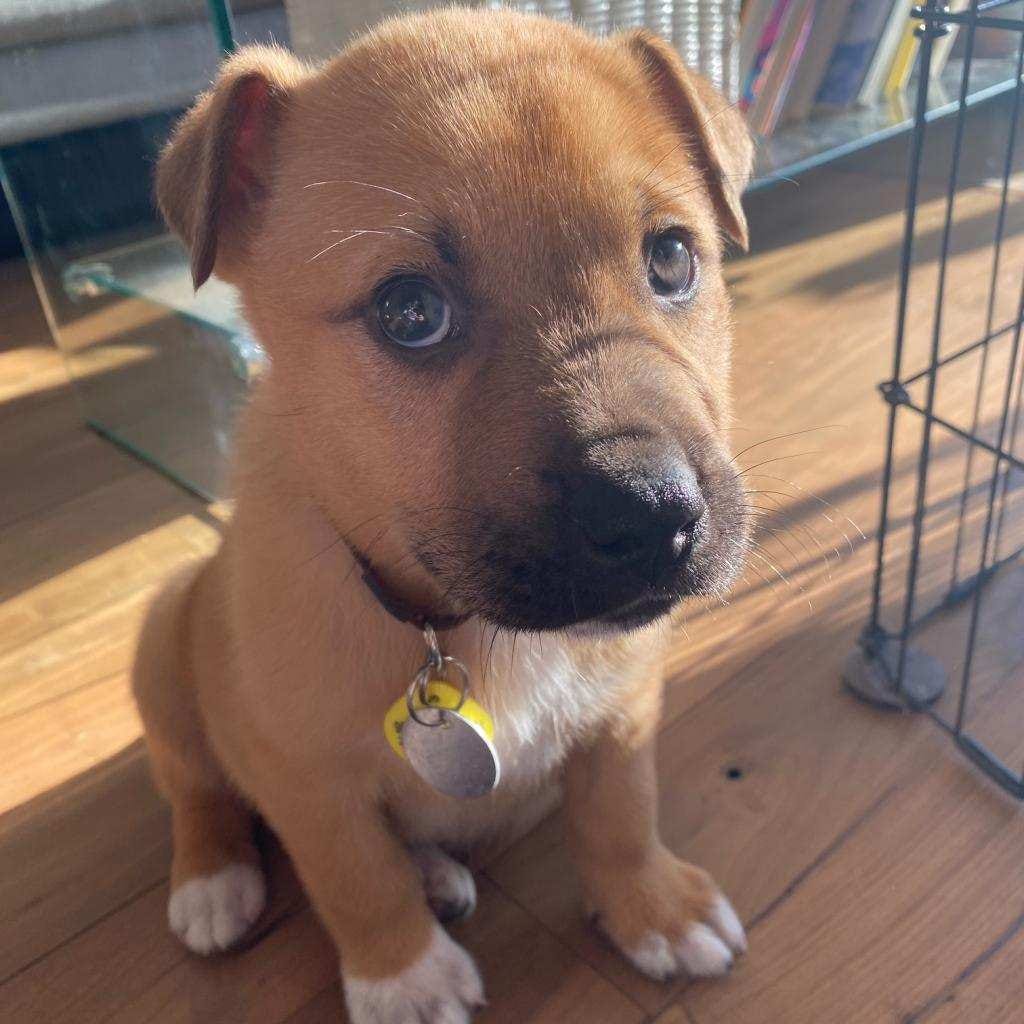
It happened so fast. After a Zoom meet-and-greet, they told us we could pick him up on Friday. We rushed around buying everything we thought we needed to welcome home a three-month-old baby dog. On Friday evening, we retrieved him in Manhattan. When I picked him up off the sidewalk, he looked at me and licked my face. I loved him. We got in an Uber and he cried, non-stop, for 3/4 of the ride home, until he exhausted himself and fell asleep in my lap. We named him Lou, after one of our favorite musicians: Lou Reed. Until recently, my best friend thought he was named after Lou Bega of “Mambo Number 5” fame.
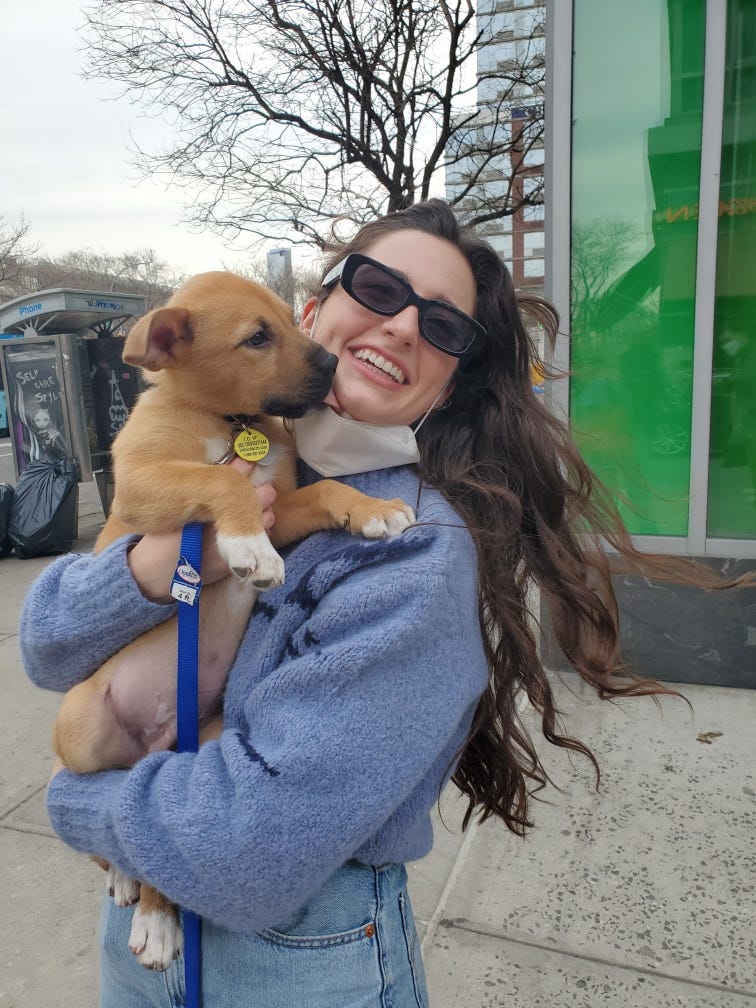
His first year was a breeze. We faced all the normal puppy stuff: potty training, destroyed hands from razor-sharp puppy-teeth, chewing (I put white vinegar on everything), giardia, incontinence from being neutered too young at the shelter, my family dog shunning him and us for bringing this newbie into his life against his will… just puppy stuff. We celebrated his victories, and rectified our mistakes. But the thing about life is that you don’t know what you don’t know, and we made a lot of mistakes that we didn’t recognize. Those had a lasting effect on little Lou, like bringing him to packed city dog parks, where he interacted with tons of dogs in ways we didn’t understand during the most impressionable time of his development.
Around the time Lou turned one, our vet explained the “fear stage,” which is explained differently everywhere, and is something that I’d never heard of (as someone who’s always had dogs), until we got him. While dogs experience this stage in a few different periods of development, our veterinarian warned that the most crucial fear stage happens around the time that they turn a year old. We later learned that because Lou is a big breed (mostly Great Pyrenees), which grows until they’re two, and mature slower, his fear stages lasted longer than smaller dogs. The vet told us that during the fear stage, when dogs experience new things that scare them, they can become life-long, or escalate, if not dealt with. He told us that when Lou experiences something he’s apprehensive about, we should cheer and give him treats and show him that good things happen when he sees or experiences this new thing. We tried that, and it often worked, except with the vacuum, the broom, things falling down, and, as we’d realize, the things that scared him that we didn’t notice right away.
When Lou was a puppy and early adolescent, we let other dogs and their families approach him on the leash any time. If Lou got excited, we let him lead the way to explore. We learned from a trainer later on that wasn’t a good idea. It reinforced that he could do whatever he wanted on the leash, instead of showing him that when he’s on the leash, we’re working together to get where we need to go.
When he was one, he started clearly getting bullied by another dog at the dog park. He’d get nervous and sad when the dog came in, and would run away because the dog would always bite him on the butt. At first, we thought this was harmless and something the dogs could work out between them. Lou would set a boundary and the other dog would stop violating it. When that didn’t work, we started leaving or avoiding the park whenever that dog was around. But the damage was done. Shortly after, Lou started exhibiting reactive behaviors.
Around then, Jason read “Inside of a Dog: What Dogs See, Smell, and Know,” by Alexandra Horowitz, which explains dog psychology. We learned that so much of “normal” dog behavior goes unnoticed by humans as important signals about what’s going on in their mind. When dogs interact socially, so much of what’s happening goes unseen or understood by humans. They’re reading each other’s posture, body-language, scent, etc for information about how to react and behave. We only understood this after Lou started showing signs that something was wrong.
The first time it happened, we were visiting our neighborhood dog park and Jason was opening a new bag of treats for Lou. He was waiting patiently, and another dog approached, also looking for a treat. Suddenly, Lou was barking and chasing the dog away. We were horrified. We took him out of the park while everyone stared at us as though our dog was a murderous fiend. Even though we knew Lou’s true personality was a sweet, cuddly, silly, self-conscious little guy who had picked up all the training we gave him so quickly, I couldn’t help but think, despite our best efforts, he’d become my worst fear: a mean dog.
In reality, Lou started displaying reactive behavior. According to the American Kennel Club, dog reactivity means that a dog “responds to normal, common occurrences with abnormal and excessive levels of arousal.” That arousal sometimes looks like excitedly jumping and barking, or lunging and barking more angrily in the same types of situations. Both are reactivity.
The behavior got a lot worse. After the first incident, he started furiously barking any time he saw a big black dog on the leash. Eventually, he couldn’t see any dog at any distance without going completely ballistic. We tried every training tip we could find, bought a waist leash so I could better handle him during episodes on our walk, started watching every YouTube video we could find (we especially liked Zak George) and spent over a year working on positive-reinforcement tactics to improve his tantrums. When he was about two-and-a-half, after I spent a walk desperately gripping a wrought-iron fence to stay upright during an outburst, we decided it was getting too scary. Weeks before, he’d dragged Jason over a curb, scraping his ankle along the pavement which resulted in a horrible gash and infection. We were exhausted and needed professional help.
I’d be lying if I said I didn’t think about surrendering Lou. The whole situation felt so helpless. In any comfortable environment, he was an absolute treasure. But as soon as we put on that leash and went out into the world, his behavior frightened me. I stopped walking him by myself because he was so much stronger than me, and I was scared he’d seriously injure us both and potentially another animal. Ultimately, we never truly entertained giving up on him. He’s family. We believed in him, even if our hopes dwindled. I demanded we send him away for a board and train, and Jason firmly refused to pursue any of the military-style ones. There are different opinions on this, and I didn’t know any of them at the time, but we decided that type of training is too harsh and punitive, and that we preferred positive-reinforcement-only training. Jason found Instinct Dog Behavior & Training, and we had a consult. We discussed doing a three-week board and train, which they call “camp,” and when we had the pre-camp call with his trainer, Briana, she said: “I want you to know he’s not like this because you’ve done anything wrong. He has anxiety. He’s afraid and reacting to his fear. Getting him help means you’re good dog parents, not bad ones.” Remembering that still chokes me up. We thought we ruined our inherently sweet guy, who’s always searching for everyone’s approval, humans and animals alike.

Lou made it a week and a half into camp before we made the decision with his trainer to pull him out and get him on anxiety medication. He was so nervous he cried through most of the training sessions, which meant he was only absorbing half or less of the information. He loved all of the employees, he just couldn’t shake the anxiety. Learning this, I remembered how he cried the whole way home when we first picked him up, or how he’d get so overwhelmed at mealtimes as a baby that he’d throw his little body into the kitchen cabinets. I was so scared about the latter that I called my mom and told her, “It’s not normal, I’m worried there’s something wrong with him.” She told me, “It’s normal for puppies to get really excited for food, he will grow out of it.” He didn’t grow out of big reactions to normal things, but we were doing something about it now.
After adjusting to his new medication, Lou went back to camp for another two weeks. When he came home, we expected minor changes, like a few less fits with less intensity and shorter duration. Within two weeks, he saw big black dogs without making a sound. The first time he calmly looked at and away from a big black dog, I burst into tears on the sidewalk. I never thought I’d be able to walk him again around other dogs, let alone the types that triggered his most severe reactions. We walk him at least twice a day every single day. The progress he made changed our lives in terms of reducing the amount of stress we all dealt with daily. He’s continued progressing every week. He just turned four, and while not always perfect, he’s lightyears away from the dog who wanted to fight every canine in a mile radius of our apartment.
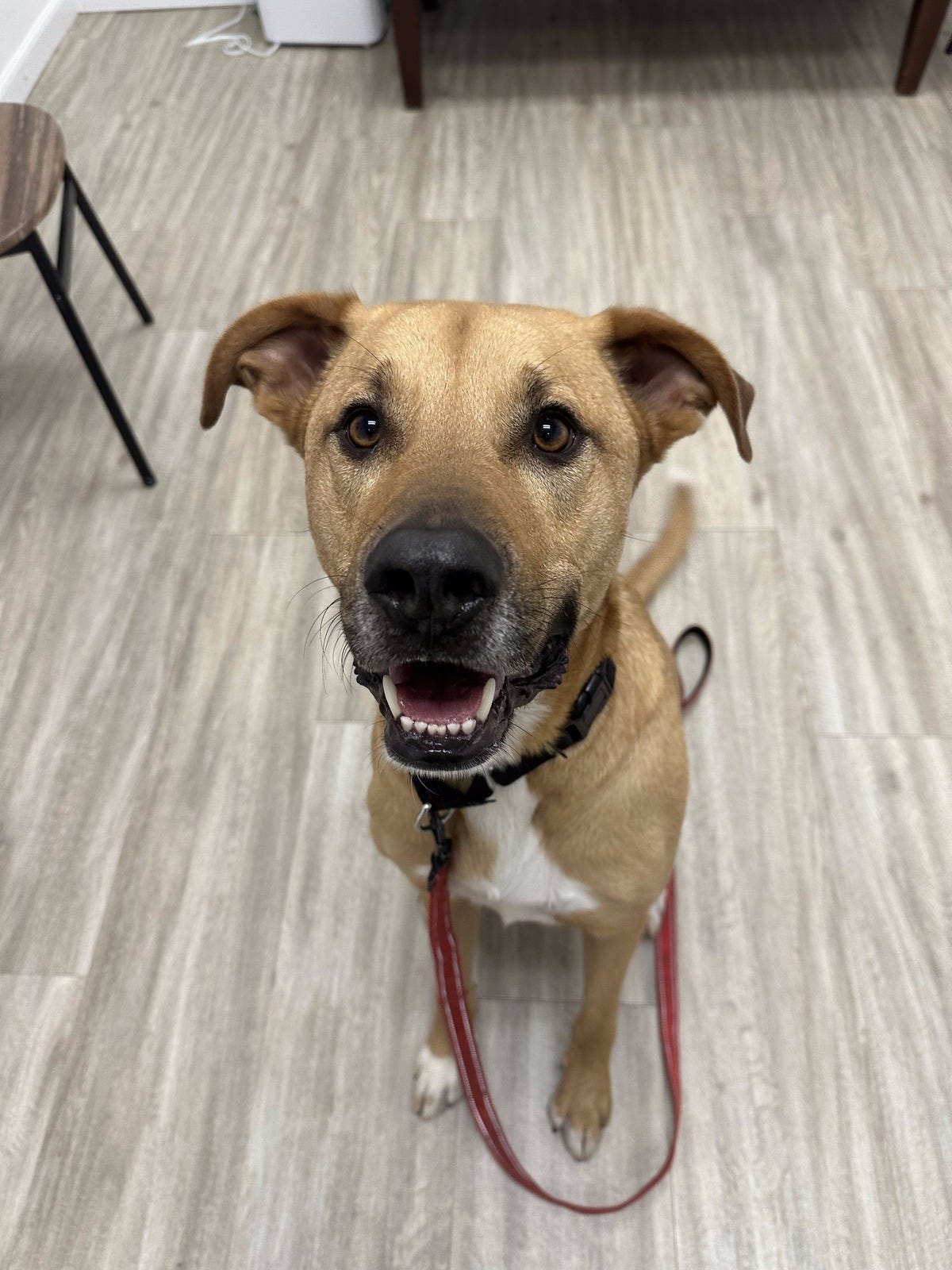
Finding out that Lou’s behavior was caused by anxiety, not viciousness, changed me. I’ve always struggled with patience. For the first two years of his presence in my home, as much as I adored him, it felt like Lou was sent to push my buttons to their absolute limits. I didn’t know what burnout was until Jason and I tried to remedy his reactivity ourselves. When Briana explained the extent of his fear - that our gentle boy was lashing out because he was in complete emotional distress that he assumed he needed to solve alone - my frustration melted away. He wasn’t alone, and it was my job to show him that. He needed my help, and his reactions were screams for it.
Until that point, Jason was always the patient one. Everyone commented on how good he was with Lou, how he never got frustrated. By the time Lou was at his worst, we were both beyond frustrated. We didn’t have anything to give but frustration. Now, we’re both the patient one. When Lou starts whining or crying on walks, I mostly feel compassion. In the moment, I use his training to tell him:
I know you’re hurting.
I’m here with you.
You’re not alone.
We’re getting through this together.
Lately, I’ve needed reminders, like this story, about how we find and hold onto hope, compassion, resilience, and persistence. More and more, when I look at the world in larger parts, everything shifts and blurs, like I’m looking through a kaleidoscope. I know I recognize some of what I’m seeing, but I no longer understand why it looks this way, how the bigger picture will come back into focus, or if I’ll ever see it the same.
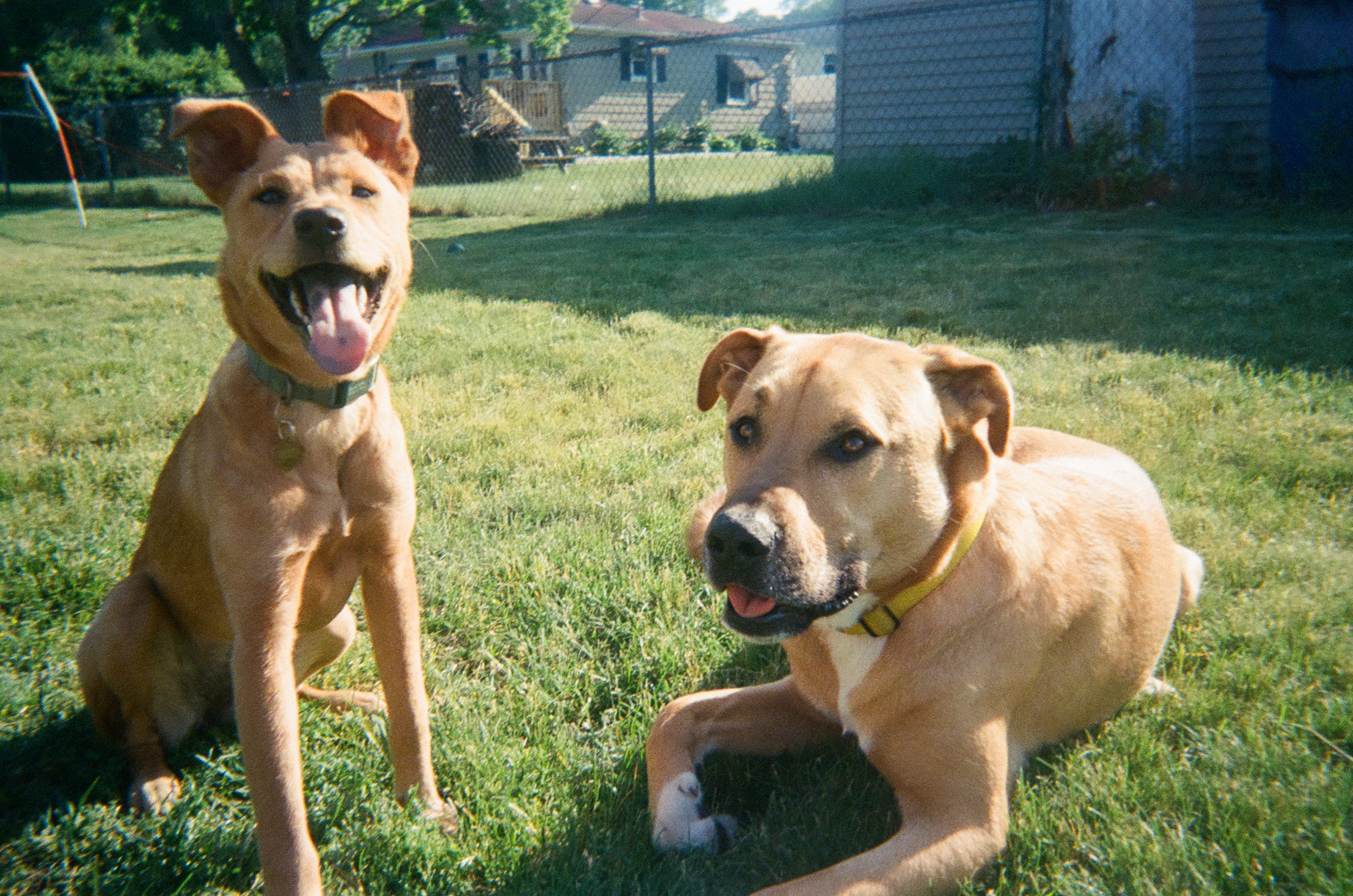
So right now, I look at Lou. When I do, I remember that in his short little life, he’s taught me that things aren’t always as they appear. Often, what looks like meanness, hopelessness, and anger, is informed by, or shrouding, fear and pain. That with a little compassion, pain can be discovered and healed. I know the situation our nation finds itself in is far from that simple, but I also know that extreme judgements and ostracism have only helped get us where we are now. I’m not saying we need to individually feel and dole out compassion for powerful people actively harming our communities; in fact, knowing and acting on compassion are different things. Staying in touch with it makes and keeps us human. Compassion never killed anyone, and in the case of my household at least, it’s founded solutions that truly saved us.
Hot
Big Feeling Ice Cream - I visited Providence, RI over the weekend and finally got to stop into the new Big Feeling brick & mortar and for some Mango Sticky Rice and Key Lime Pie flavors and it was truly joyful. Can’t wait to go back.
Morgenstern’s Finest Ice Cream - Morgenstern’s has always been one of my favorite NYC scoop shops, but since they revamped their flavor menu last year, it’s leveled up. We stopped by for scoops last weekend and I got Raspberry Black Sesame and Pistachio Black Currant Jelly, and both were life-affirming. ICYMI, I LOVE ice cream.
The Last Showgirl - I’ll be thinking about this movie for a long, long, long time. Thinking about writing about it. The performances are amazing, and I love that the story spotlights women whose stories would normally be written for them - women who are often defined and sidelined by society instead of treated as worthy characters. I just loved it.
Bothered
Plane crashes - there were two plane crashes in the past week, which I didn’t expect to be one of the major problems we’d face in the first 100 days of this administration, but it’s made me even more afraid about all of the effects we haven’t yet felt.
Healthcare - It’s a sad state of affairs when we’re relying on celebrities to beg for/demand proper wages and healthcare and safety at award shows for artists and trans people. One bright light this week is Dr. Jeffrey Birnbaum, a pediatrician at University Hospital of Brooklyn, who told his patients: “I’m willing to go to jail to continue to provide your care,” after an executive order was issued threatening to end federal funding to hospitals who continue providing gender-affirming care.
Why can’t we get it together? I’ve been both inspired and sad reading lately about Claudia Schienbaum, who is the female president of Mexico and has been doing some really cool things in her first 100 days, like lowering the pension-access age for women to 60 (still 65 for men) to account for all the unpaid labor women have historically done in the home. She has an 80% approval rating, popular even among those who didn’t vote for her. I’m learning more about her, but I’m jealous based on what I know. Time will tell how she and her party continue leading.
You made it! Thanks for reading. Leaving you with this:
This was a great read 💕